
The Woman Who Counted Raindrops
Special Feature Edition
Turn back.
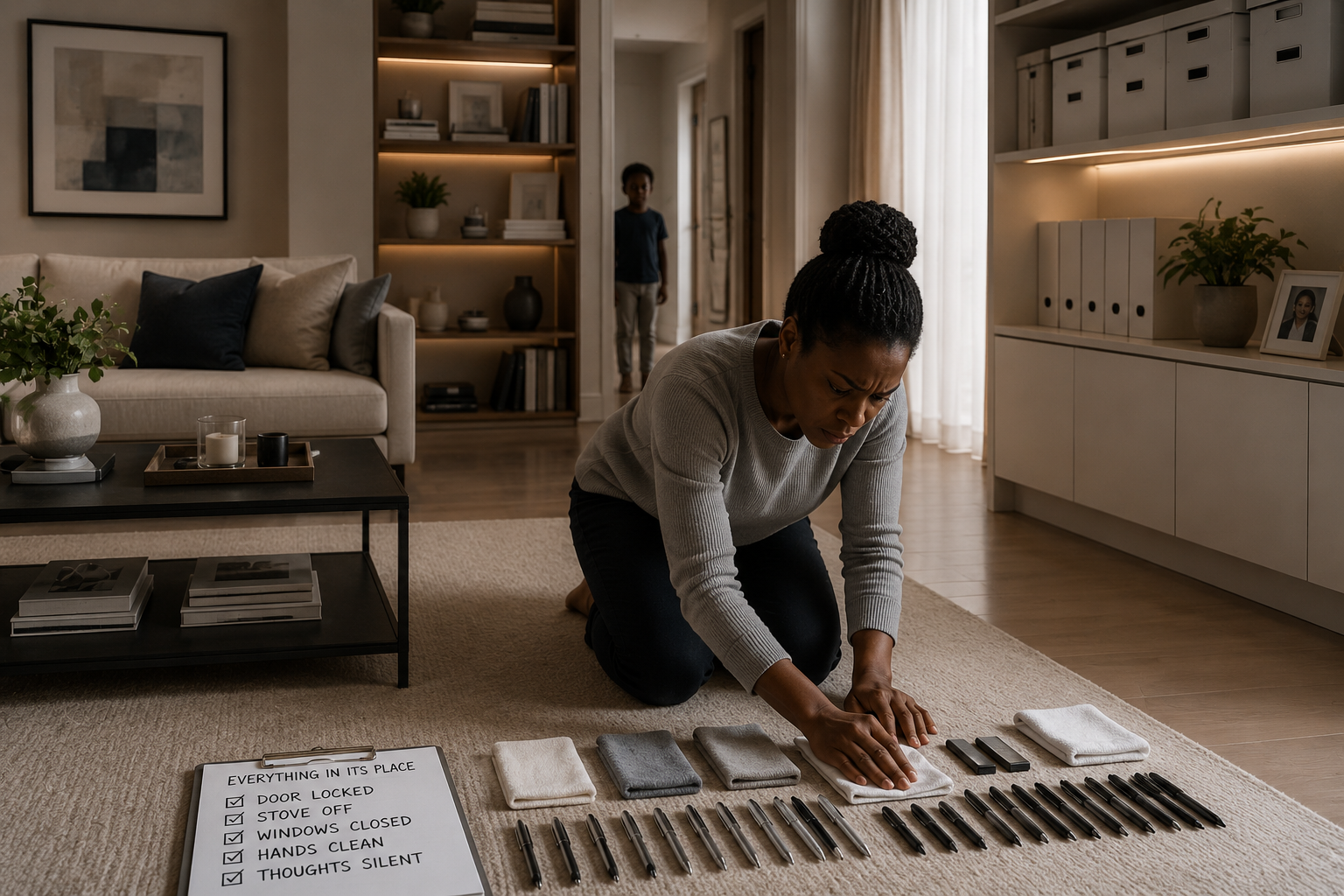
Wash them again.
If the sequence felt incomplete—if her mind whispered that the last rinse had somehow been "wrong"—everything began again.
Twenty-three.
Dry.
Three steps.
Repeat.
On particularly difficult mornings, sunrise arrived long before breakfast did.
To anyone passing her apartment window, Mara appeared disciplined.
Organised.
Meticulous.
Even admirable.
No one saw the negotiations happening inside her mind.
"Wash them again."
"You touched the cupboard."
"You missed a spot."
"If you stop now..."
The sentence never finished.
It never had to.
Her imagination always completed it.
...someone you love will suffer.
...your mother will die.
...your little nephew will be hurt because you were careless.
The threats were absurd.
She knew they were absurd.
Yet knowledge was powerless against certainty's cruel counterfeit.
Once, Mara had been an architect.
She designed children's libraries filled with light.
She loved curves instead of corners.
Open spaces instead of walls.
She often joked that buildings, like people, deserved room to breathe.
Now she couldn't leave her apartment in under three hours.
Shoes had to be tied equally.
The front door locked twelve times.
The gas cooker inspected in symmetrical patterns.
The curtains adjusted until both sides "felt balanced."
If one ritual was interrupted...
Everything restarted.
There is a loneliness peculiar to invisible illnesses.
Friends gradually stopped inviting her.
Colleagues stopped asking.
Family members became experts at pretending not to notice.
Only her grandmother refused to pretend.
One afternoon the elderly woman arrived carrying mangoes and absolutely no patience.
She found Mara frozen at the doorway.
Hand on the doorknob.
Unable to cross the threshold.
They stood there for nearly fifteen minutes.
Finally her grandmother sighed.
"You know," she said gently, "when you were little, you used to jump into puddles without looking."
Mara laughed weakly.
"I also believed chickens could solve mathematics."
Her grandmother smiled.
"Maybe."
She reached forward.
Opened the door.
Walked outside.
Nothing happened.
Birds continued singing.
Children continued laughing downstairs.
The world, infuriatingly, refused to collapse.
That evening Mara cried harder than she had in years.
Not because she had failed.
Because she realised how exhausted she had become trying to protect everyone from disasters that existed only inside her own mind.
Weeks later she found herself sitting opposite Dr. Elias Mwangi.
His office surprised her.
No imposing desk.
No intimidating certificates.
Only books.
Plants.
A kettle.
And a window overlooking jacaranda trees.
He listened carefully while Mara explained her rituals.
Then he asked one unexpected question.
"If OCD had a voice..."
She frowned.
"It already does."
"What does it sound like?"
She hesitated.
"...Like someone who loves me."
He nodded slowly.
"And what does it ask for in return?"
Mara looked down.
"Everything."
Silence settled softly between them.
Finally he said,
"Then perhaps it doesn't love you after all."
The weeks that followed were unlike any Mara had imagined.
She expected therapy to erase frightening thoughts.
Instead, Dr. Mwangi encouraged her to stop fighting them altogether.
"You cannot argue your way out of every intrusive thought," he explained one afternoon.
"You've been trying that for years."
"So what do I do?"
"You let them exist."
She stared.
"That's it?"
"Not because they deserve your attention."
He smiled.
"But because they don't."
During Cognitive Behavioural Therapy (CBT), Mara learned something astonishing.
Thoughts were not instructions.
They were not predictions.
Nor were they evidence.
They were simply mental events.
Like passing traffic.
Like weather.
Some deserved attention.
Many did not.
For years she had treated every frightening thought as a fire alarm.
Now she was learning that some alarms malfunction.
The next phase frightened her even more.
Exposure and Response Prevention (ERP).
Dr. Mwangi placed a single dusty book on the table.
"I'd like you to touch it."
She laughed nervously.
"And then?"
"Nothing."
"...Nothing?"
"No washing."
"No sanitiser?"
"No."
"What if—"
He raised an eyebrow.
"What if?"
She waited.
The sentence dangled unfinished.
For once...
He refused to complete it.
The first exposure lasted only four minutes.
It felt like four centuries.
Sweat collected on her forehead.
Her breathing quickened.
Her fingers tingled.
Every instinct screamed.
"Wash them!"
"Now!"
"Before it's too late!"
She looked at Dr. Mwangi.
"Aren't you going to help me?"
"I am."
"It doesn't feel like it."
"Recovery rarely does."
Something extraordinary happened.
Not immediately.
Not dramatically.
The panic rose.
Peaked.
Then...
Without washing.
Without rituals.
Without reassurance.
It slowly drifted away.
Like a wave returning to sea.
Mara blinked.
"That's impossible."
Dr. Mwangi smiled.
"No."
"It's biology."
Recovery, however, refused to travel in straight lines.
Three months later her father suffered a mild stroke.
Old fears returned overnight.
Rituals reappeared.
She nearly cancelled therapy altogether.
Instead she arrived furious.
"I thought I was getting better."
"You are."
"It doesn't feel like it."
Dr. Mwangi picked up a pencil.
He drew two lines.
One climbed steadily upward.
The other zigzagged violently while still rising overall.
"Which one is real recovery?"
She pointed reluctantly.
"The messy one."
"Exactly."
As therapy progressed, Mara was introduced to Acceptance and Commitment Therapy (ACT).
Rather than asking whether fear disappeared, ACT asked a different question:
"What kind of life do you want to build, even while fear is present?"
She wrote one sentence in her notebook.
"I miss designing places where children imagine impossible things."
Months later she accepted freelance work again.
Not because anxiety had vanished.
Because purpose had finally become louder.
She also began practising mindfulness—not as a relaxation trick, but as a way of noticing thoughts without immediately obeying them.
Every evening she sat quietly on her balcony.
She watched clouds move.
She named sounds.
Cars.
Birds.
Wind.
Children playing football.
Whenever intrusive thoughts appeared, she imagined them as curious passengers boarding a bus.
Some were loud.
Some rude.
Some frightening.
None were allowed to grab the steering wheel.
Technology quietly joined her recovery too.
Using a clinician-recommended digital CBT programme, Mara tracked compulsions, logged anxiety before and after exposures, celebrated milestones, and recognised patterns she had never noticed before.
Progress became visible.
Not perfect.
Visible.
There is a difference.
One Saturday afternoon, her eight-year-old nephew, Kito, visited.
He carried crayons everywhere.
Together they sat on the floor drawing imaginary cities.
Without warning he frowned.
"Auntie?"
"Yes?"
"Why do you erase your drawings so much?"
She looked at the paper.
Every building she'd sketched had been rubbed out repeatedly until the page had nearly torn.
"I suppose..."
She smiled sadly.
"I've always wanted things to be perfect."
Kito considered this deeply.
Then he held up his own picture.
The sun was purple.
The giraffe had wings.
The roads floated through the sky.
"I like mistakes," he declared.
"They make stories."
For reasons she couldn't explain, Mara burst into laughter.
The deep, helpless kind.
The kind that arrives after years of forgetting how.
Two years later, Mara stood before the opening of the Mwangaza Children's Learning Centre—her first completed architectural project since illness had interrupted her career.
The building was magnificent.
Nothing inside it matched perfectly.
The windows differed slightly in shape.
The pathways curved unexpectedly.
The colourful reading pods leaned playfully rather than sitting in rigid symmetry.
One journalist asked why.
Mara smiled.
"Because perfection is overrated."
That evening she returned home.
She placed her keys on the table.
Locked the door.
Only once.
A familiar voice whispered inside her mind.
"Are you sure?"
She smiled toward the silence.
"No."
"I never will be."
Then she switched off the lights and walked away anyway.
A Final Reflection
Obsessive-Compulsive Disorder often convinces people that absolute certainty is both possible and necessary. In reality, certainty is an illusion none of us can fully possess. Modern, evidence-based interventions—including Cognitive Behavioural Therapy (CBT), Exposure and Response Prevention (ERP), Acceptance and Commitment Therapy (ACT), mindfulness-informed practices, supportive family involvement, digital therapeutic tools, healthy lifestyle changes, and, when appropriate, medication prescribed by qualified healthcare professionals—can help individuals loosen OCD's grip and rediscover lives guided by purpose rather than fear.
Recovery is not the absence of intrusive thoughts.
It is the quiet courage to hear them...
...and keep walking anyway.
Community Discussion (0)
You must be logged in to comment or react to articles and community threads.
Log In to Participate
No comments yet. Be the first to share your thoughts!